Victorian Planning Reforms: the New Mid-Rise Code
Words — Tract
Images — JMSN Property
Category — Insights
The Mid-Rise Code (the ‘Code’) was released yesterday, the latest of the Victorian Government’s planning reforms as part of their implementation of the Victorian Housing Statement: The Decade Ahead 2024-2034.
The Code establishes a new assessment framework for 4–6 storey midrise apartment buildings and, importantly, adopts a ‘deemed to comply’ (DTC) model, mirroring the Townhouse Code and Low-Rise Code introduced last year for 1–3 storey development. This approach is intended to streamline and simplify the planning approval process.
In this article, our team provides an overview of the changes which will become operational on 16 April 2026.
Key Takeaways
- The Victorian Government has released the Mid-Rise Code, introducing a new deemed to comply (DTC) assessment framework for 4–6 storey residential buildings, commencing 16 April 2026.
- The Code’s greatest advantage is the introduction of a clear DTC pathway, offering a faster, more predictable approval process with reduced planning risk. However, delivering a fully DTC development is likely to result in a lower development yield on many sites compared with what could otherwise be achieved under a performance-based assessment (or under the Clause 58 provisions which previously applied).
- It generally applies in residential zones where 4-6 storey buildings are contemplated (noting that this excludes the Neighbourhood Residential Zone and General Residential Zone).
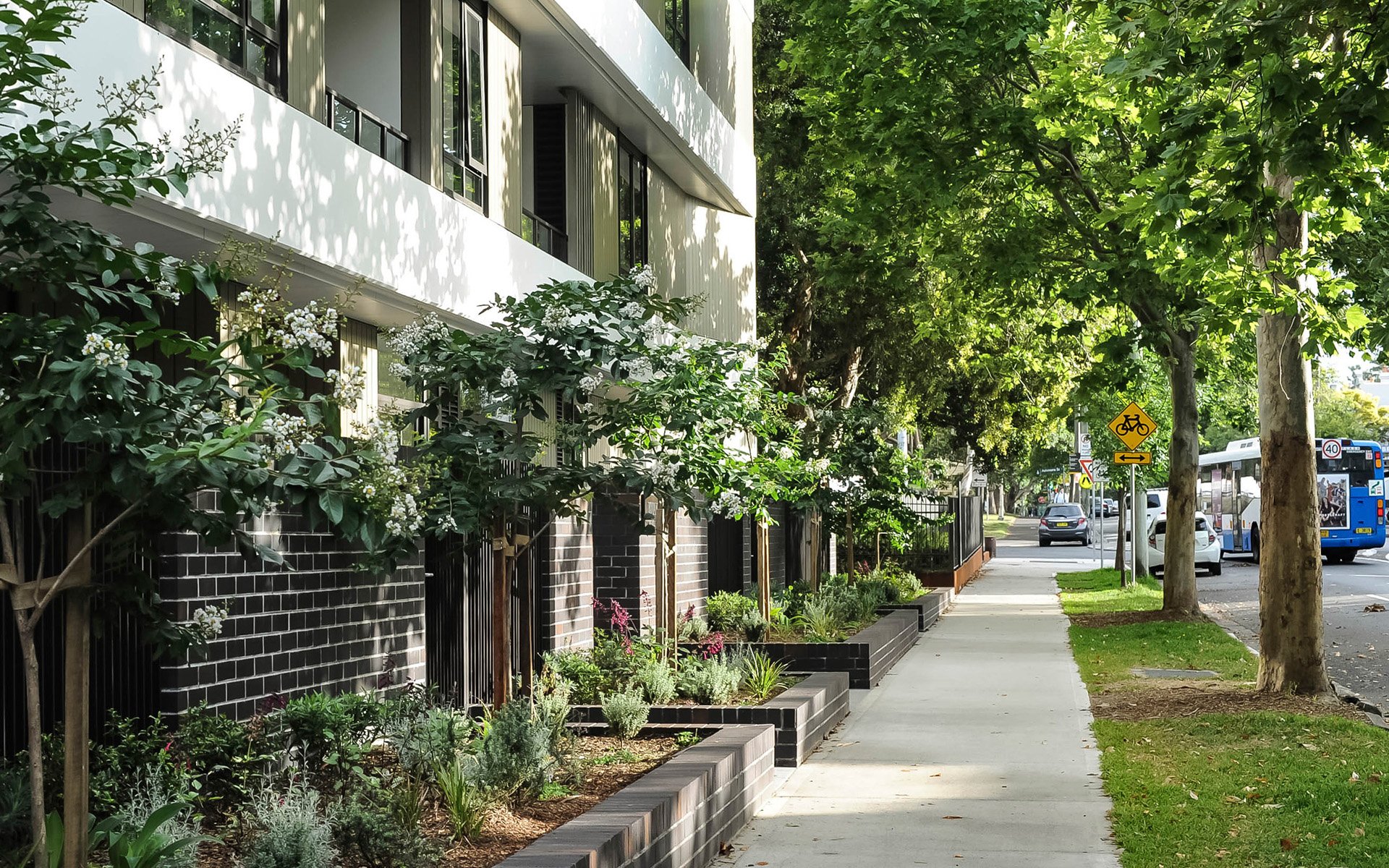
- The Standards facilitate a Garden Apartment typology, which has historically been difficult to deliver in metropolitan Melbourne due to economic feasibility constraints.
- Achieving a fully DTC outcome will typically require lot consolidation, which may be challenging in areas with fragmented ownership or existing strata titles.
- Overlays remain fully in force, meaning some developments will not receive the full benefits of the Code – particularly around third-party appeal rights.
- Several elements of the Code differ from Clauses 55 and 58, including overlooking distances, daylight and open space requirements, canopy tree standards, and dwelling diversity provisions – creating potential for interpretation challenges.
- The coexistence of multiple assessment pathways means similar scale buildings may be assessed under different frameworks, adding complexity in determining which tool applies at the outset.
- While the reform direction is supported, inconsistencies and gaps may result in slower assessments and reduced clarity unless further refinement occurs.
How will it work?
The Activity Centres Program has substantially expanded the areas within metropolitan Melbourne where midrise apartment buildings can be delivered. However, the Victorian Planning Scheme has historically provided limited guidance for “missing middle’’ development, with assessment frameworks largely focused on low-rise housing (Clause 55) or high-rise apartments (Clause 58).
The new Mid- Rise Code will replace the existing 4-storey provisions within Clause 57. It operates in the same way as the Townhouse and Low-Rise Code (Clause 55). Where a proposal meets the numerical Standard, it is ‘deemed to comply’, essentially ‘ticking the box’ and removing the ability for the Responsible Authority undertake a merits-based assessment. It is still possible to propose variations to the Standards, with any varied Standard subject to the usual full assessment.
Council may introduce variations to Clause 57 via a Schedule to the Zone, but only where they are less restrictive (to enable a more intensive development outcome).
Whilst public notice continues to apply regardless of whether variations are proposed, third-party appeal rights only arise where certain numerical Standards are varied, and appeals are limited solely to the varied Standard.
Importantly, the Code does not override existing Overlays such as Heritage, Design and Development, Flooding, and Bushfire Overlays, with planning permit requirements still applying as usual under these controls.
Where will it apply?
The Code applies in the Mixed Use Zone, Residential Growth Zone, Township Zone, and the new Housing Choice and Transport Zone. It does not apply in the Commercial or Activity Centre Zones, where Clause 58 (Apartment Standards) will continue to apply regardless of the proposed building height.
Unusually, it does not apply within the General Residential Zone (GRZ), despite there being an ability to vary the GRZ locally, or use a facilitation program pathway to allow buildings higher than 3 storeys. An assessment against the Code is however still required to be submitted with the application.
When will it come into effect?
The Code becomes operational on 16 April 2026, and therefore will only apply to applications lodged from that date onwards. Any application already ‘in the system’ will be assessed against the existing Clause 57.
Key Standards
A summary of the key Standards of Clause 57 are as follows:
Notably, some Standards from Clause 55 or 58 have not been introduced in Clause 57. These include requirements guiding dwelling diversity, protecting adjoining north- facing windows and daylight to habitable room windows and building height.
- Minimum street setbacks (4.5m), side and rear setbacks (4.5m, or 6m – 12m for a southern wall)
- Site coverage standards (70%), tailored to support mid-rise development.
- The wall on boundaries provision requirement is consistent with the existing Standards within Clause 55.
- The minimum canopy cover requirements of Clause 55 have been applied, but with some further changes to consider setbacks from basements.
External amenity – Modified from those in Clause 55
- Overshadowing – Only relevant to the elements of the building which do not comply with the Siting Standards.
- Overlooking – Overlooking applies within 6m (reduced from the 9m that applies in Clause 55 and Cluse 58) and is only applied to habitable room windows or balconies that do not comply with the Siting Standards.
Liveability – Similar to existing requirements within Clause 58
- Light Courts and Building Separation – Minimum dimensions apply.
- Communal and Private Open Space – Modified from their current operation under Clause 58. Sunlight access to communal open space is also measured at the September equinox rather than June solstice.
Sustainability – Similar to existing requirements within Clauses 55 and 58
- Minimum requirements relating to dwelling cooling loads, requiring acoustic attenuation in high noise environment, a minimum 20% of permeable areas and the like.
Our Initial Thoughts
The extension of the DTC model to mid-rise development is a significant and positive reform. The ability to achieve a clear, measurable, and faster approval pathway—without subjective merits-based assessment where all Standards are met—is arguably the most important benefit of the new Code.
However, it is important to acknowledge that a fully DTC compliant envelope will often deliver a lower yield than many sites could otherwise accommodate under existing discretionary frameworks. In practice, the mandatory setbacks, landscaping requirements and separation standards embedded within the Code will produce a garden apartment typology that is more generous, but less efficient, than many current mid-rise approvals facilitated through Clause 58 or performance-based variations to Clause 55.
Our preliminary observations are outlined below:
Garden Apartment typology and feasibility
The Code has been explicitly designed around a Garden Apartment model. While this is a welcomed shift toward higher amenity development, the typology has historically been challenging to deliver at scale due to construction economics, market viability and land consolidation costs. Without broader economic reform, uptake of fully compliant schemes may remain limited.
Lot consolidation challenges
Because a compliant outcome requires substantial setbacks and canopy tree zones, achieving the intended built form will generally require the consolidation of at least two standard residential lots. This is difficult in fragmented ownership environments—especially in Activity Centres with existing aged strata stock—potentially restricting redevelopment in areas where uplift is most needed.
Need to rationalise overlays
Overlays remain a major determinant of planning risk. Their inconsistent application across metropolitan Melbourne means that many sites will not realise the full DTC benefits, particularly the removal of most third-party appeal rights. A strategic review of legacy overlays would help ensure the Code’s purpose is fully realised.
Limited zone applicability and assessment complexity
The Code is available only in selected residential and mixed use zones. Similar scale buildings in other zones—including the General Residential Zone—will be subject to different assessment tools. This complexity may create uncertainty at the outset of projects and increase the time required to determine which pathway applies before design testing can commence.
Inconsistencies with Clauses 55 and 58
Several Standards vary materially from the established frameworks in Clauses 55 and 58, including overlooking distances, open space provisions, canopy tree requirements and the absence of specific dwelling diversity provisions. These discrepancies may cause confusion during interpretation and may undermine the intended efficiencies of the Code.
How can Tract assist?
Should you have any questions or wish to discuss how these changes may impact your development strategy, reach out to your Tract contact in our planning team, or our offices via the link below.